


Master’s Degrees in Nursing
What Are Master’s Degrees in Nursing?
A master’s degree in nursing is a graduate-level credential designed for registered nurses (RNs), typically those with a Bachelor of Science in Nursing (BSN), who are interested in expanding their knowledge and exploring potential leadership, specialized clinical practice or non-clinical roles. Common degree types include the Master of Science in Nursing (MSN) and related nursing master’s programs. These degrees may offer clinical tracks (such as adult-gerontology or psychiatric mental health) or non-clinical options (such as leadership or informatics), and many are available in flexible online(See disclaimer 1) or hybrid formats. Graduates often pursue roles in advanced practice, administration, education or healthcare innovation.
Master’s degree programs in nursing vary in focus but share a foundation in advanced nursing knowledge and leadership development. Depending on your chosen specialization, you may build expertise in direct patient care, clinical decision-making and population health or explore non-clinical areas like healthcare technology, systems leadership and quality improvement to enhance patient outcomes.
Compare Graduate Nursing Pathways by Goal
Graduate nursing education can take different directions depending on your interests, experience and goals. The table below compares common focus areas to help you determine which pathway aligns with the type of nursing knowledge you want to build.
If you want to:
Consider a graduate nursing pathway focused on:
Common areas of study:
May appeal to nurses interested in:
If you want to:
Consider a graduate nursing pathway focused on:
Common areas of study:
May appeal to nurses interested in:
If you want to:
Consider a graduate nursing pathway focused on:
Common areas of study:
May appeal to nurses interested in:
If you want to:
Consider a graduate nursing pathway focused on:
Common areas of study:
May appeal to nurses interested in:
If you want to:
Consider a graduate nursing pathway focused on:
Common areas of study:
May appeal to nurses interested in:
If you want to:
Consider a graduate nursing pathway focused on:
Common areas of study:
May appeal to nurses interested in:
If you want to:
Consider a graduate nursing pathway focused on:
Common areas of study:
May appeal to nurses interested in:
How To Select a Master's Program in Nursing
Choosing the right nursing master’s program starts with understanding your current qualifications and long-term career goals. Follow these steps to narrow your options and find a program that aligns with your professional path:
Most graduate nursing programs are designed for registered nurses (RNs) who hold a Bachelor of Science in Nursing (BSN). Ensure you meet admission requirements before exploring program options.
Consider whether you want to continue providing direct patient care or transition into a non-clinical role focused on leadership, education or healthcare systems. This decision will shape the type of program you pursue.
There are opportunities for specialization in both clinical and non-clinical nursing roles. Choose a focus area that aligns with your interests and career goals. In clinical care, consider the patient population you prefer and whether you plan to pursue certification as an advanced practice registered nurse (APRN). In non-clinical paths, explore areas such as nursing education, leadership or healthcare informatics.
Clinical programs often require in-person practicum or supervised clinical hours, while non-clinical programs may include project-based or leadership-focused experiences. Make sure these requirements fit your schedule and availability.
Evaluate whether programs offer online or on-campus formats. Also review tuition, financial aid options, admission timelines and prerequisite requirements to ensure the program is a practical fit.
A counselor can help clarify program differences, admission steps and career outcomes. Getting personalized guidance can help you confidently choose the program that best fits your goals.
Explore Nursing Master’s Degrees
0 Matching Degrees
What Can You Do With a Master’s Degree in Nursing?
With graduate nursing education, you can sharpen your clinical judgment, potentially improving patient outcomes and contributing to high standards of evidence-based practice. Your nursing career options will vary, depending on the specific master’s degree you earn. You may decide to pursue an advanced practice role(See disclaimer 2) in a specialty area such as psychiatric mental health, or you may decide to step into the role of a postsecondary educator,(See disclaimer 3) teaching the next generation of nurses.
Some careers you may wish to pursue include:
Nurse administrator
Manage daily operations and nursing staff of a nursing department or healthcare facility.
Nurse instructor
Teach nursing students how to deliver evidence-based care.
Nurse practitioner
Serve as a clinical leader, caring for patients across the lifespan.
Medical and health services manager
Improve efficiency in the daily operations of a healthcare facility.
Median annual salary for nurse anesthetists, nurse midwives and nurse practitioners as of May 2024(See disclaimer 4)
Projected job growth for nurse anesthetists, nurse midwives and nurse practitioners from 2024 through 2034(See disclaimer 5)
Online Nursing Master’s Degrees
A wide range of nursing master’s programs online(See disclaimer 6) are available and can offer more flexibility to working nurses. Your master’s-level nursing degree may include in-person learning components, such as practicum/field experience/clinical hours, which must be completed in person locally and serve to strengthen applied skills in patient assessment and treatment.

FAQs About Master’s Degrees in Nursing
Our frequently asked questions can provide a starting point for your research as you consider which of these nursing master’s degrees could be the right choice for you.
What focus areas are available in master’s degrees in nursing?
Can graduate nursing programs support doctoral education goals?
Can working nurses complete a nursing master’s degree while employed?
Do you need a BSN to get a master’s degree in nursing?
Are master’s degrees in nursing worth it?
What is the difference between clinical and non-clinical nursing pathways?
Do nursing master’s programs require clinical or practicum hours?
Do nurses get paid more with a master’s?
Why Pursue Nursing Master’s Degrees At GCU?
GCU has long championed the nursing workforce by providing pathways to either enter the nursing field or pursue advanced nursing credentials. Our nursing students receive access to extensive student support resources, including supportive faculty, tutoring and field experience placement assistance. Additionally, our online(See disclaimer 1) students can request technical support as needed.
GCU has been institutionally accredited by the Higher Learning Commission since 1968. The College of Nursing and Health Care Professions shares the university’s commitment to upholding the principles and standards established by our accrediting bodies.
Nursing Master's Program Costs and Tuition
The cost of a master’s degree in nursing can vary based on the program, course load, transfer credits and available scholarship opportunities. We offer resources to help eligible students understand tuition rates and explore ways to manage education expenses. A university counselor can help you estimate your program costs and review financial options that may apply to you.
Discover Your Financial Options
Speak with a university counselor to discover savings opportunities.
Ways To Save
Your education is an important financial investment, and there are several ways to help manage costs while earning your degree. GCU’s university counselors are available to help you explore available options and provide personalized guidance on your estimated cost of attendance.
Complete the Free Application for Federal Student Aid (FAFSA) annually to determine eligibility for federal grants and student loans. Since some aid is awarded on a first‑come, first‑served basis, GCU recommends submitting the FAFSA as early as possible after Oct. 1 to maximize funding opportunities.
If you’ve earned college credits from another institution, you may be able to complete your degree sooner at GCU by transferring those credits. Submit the Lopes Unofficial Credit Evaluation form, then connect with a university counselor who can provide you with personalized guidance.
You may be able to reduce your college costs by applying for GCU’s on-campus or online student scholarships. We invite you to explore available institutional scholarships and determine which opportunities you may be eligible for. GCU also encourages students to seek out third‑party scholarships and grants.
What Are the Admission Requirements for a Nursing Master's Degree?
GCU has streamlined the process of applying for admission to the university. Our school does not require a personal statement or essay, and there is no application fee. Specific requirements can vary, depending on the degree or program.

You can apply to a degree program at GCU in just three simple steps. Your university counselor is standing by to assist you with any questions about the application process.
It starts with selecting the program that aligns with your goals from one of GCU's 380+ academic programs — from undergraduate degrees to post-master’s certificate programs to doctoral degrees.
Pick your program
Explore our on-campus, online or evening cohort options under the Degree Programs page to find the right program for you.
Complete our online application
Your university counselor will direct you to the online application. Fill in all required information and submit the form.
Submit supporting documents
Submit your official transcripts and any relevant test scores, and confirm with your university counselor that all forms for your desired program are submitted.
Explore More Nursing Topics
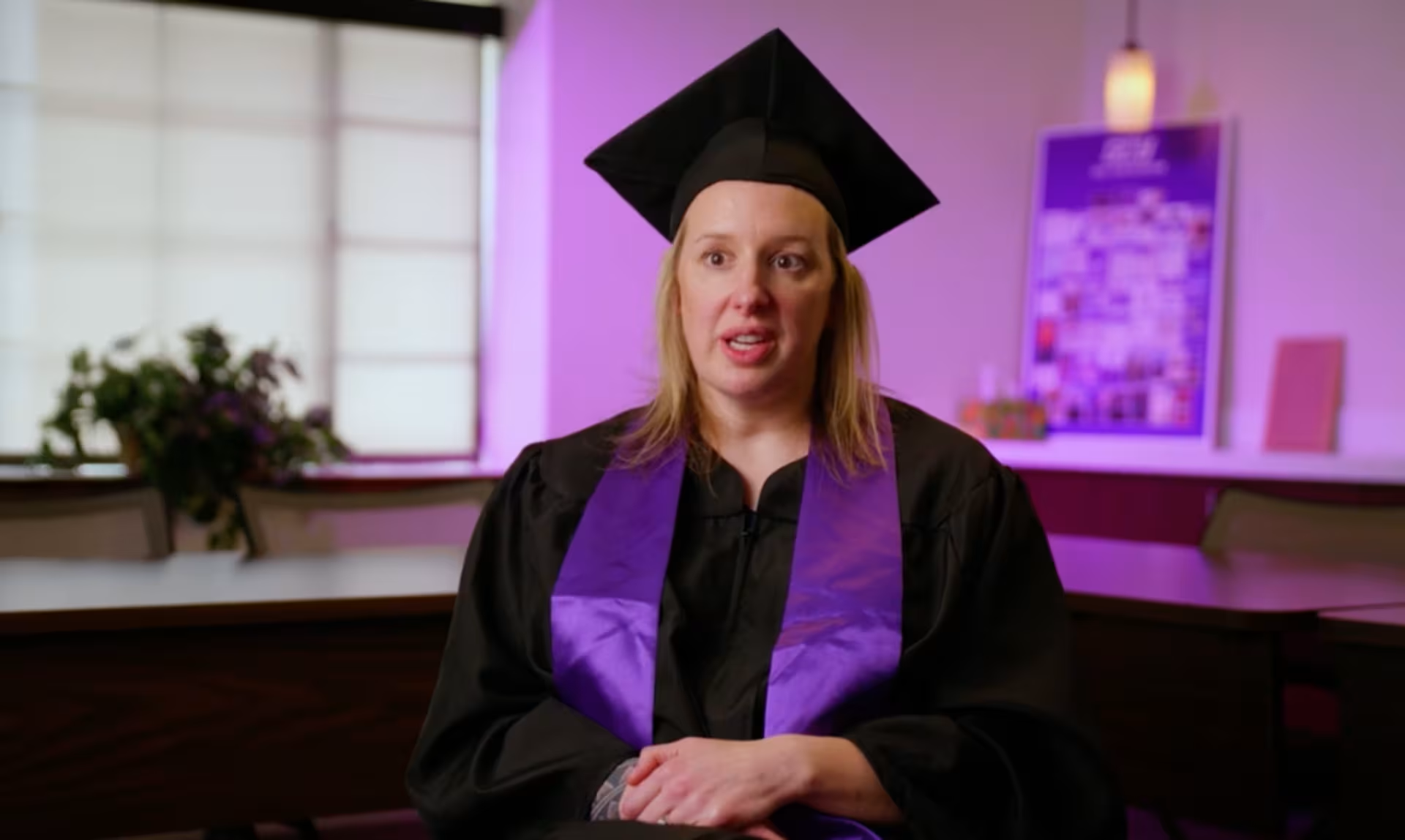


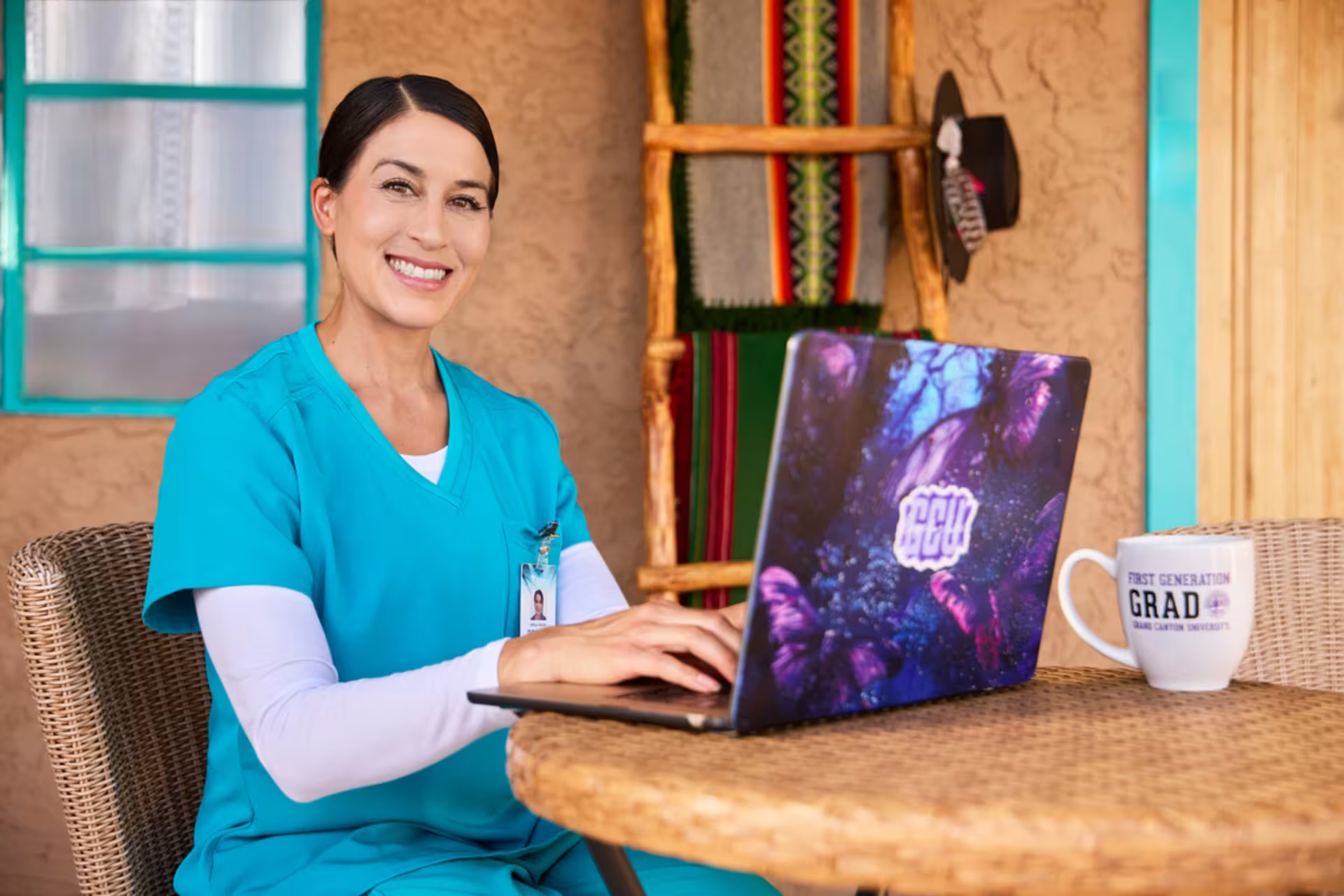
Build on your nursing experience with a graduate nursing degree from GCU.
Clinical, practicum and immersion hours completed locally.
- U.S. Bureau of Labor Statistics. (2025, Aug. 28). How To Become a Nurse Anesthetist, Nurse Midwife, or Nurse Practitioner. Occupational Outlook Handbook. Retrieved June 2026.
- U.S. Bureau of Labor Statistics. (2025, Aug. 28). How To Become a Postsecondary Teacher. Occupational Outlook Handbook. Retrieved June 2026.
- The earnings referenced were reported by the U.S. Bureau of Labor Statistics (BLS), Nurse Anesthetists, Nurse Midwives and Nurse Practitioners, as of May 2024, retrieved June 2026. Due to COVID-19, data from 2020 to 2023 may be atypical compared to prior years. BLS calculates the median using salaries of workers nationwide with varying levels of education and experience. It does not reflect the earnings of GCU graduates as Nurse Anesthetists, Nurse Midwives and Nurse Practitioners, nor does it reflect the earnings of workers in one city or region of the country or a typical entry-level salary. Median income is the statistical midpoint for the range of salaries in a specific occupation. It is very unlikely that a median salary will reflect an entry-level salary. It represents what you would earn if you were paid more money than half the workers in an occupation, and less than half the workers in an occupation. It may give you a basis to estimate what you might earn at some point if you enter this career. Grand Canyon University can make no guarantees on individual graduates’ salaries. Your employability will be determined by numerous factors over which GCU has no control, such as the employer the graduate chooses to apply to, the graduate’s experience level, individual characteristics, skills, etc. against a pool of candidates.
COVID-19 has adversely affected the global economy and data from 2020 to 2023 may be atypical compared to prior years. Accordingly, data shown is effective August 2025, which can be found here: U.S. Bureau of Labor Statistics, Occupational Outlook Handbook, Nurse Anesthetists, Nurse Midwives and Nurse Practitioners, retrieved June 2026.